War Thunder isn't just a game — it's a theatre of steel, strategy and sheer determination. For tank commanders across the United Kingdom, mastering the art of armoured warfare requires more than just quick reflexes; it demands a deep understanding of mechanics, map geography, and the subtle dance of positioning. Whether you're grinding through the early British cruisers or clashing in top-tier MBTs, this guide is built to give you the edge.
In this comprehensive War Thunder Gameplay Tanks guide, we'll cover everything from armour penetration mechanics and ammo rack management to advanced positioning strategies used by top UK players. We've also secured exclusive interviews with seasoned commanders and curated unique data to help you elevate your game. Let's load the breach and get started.
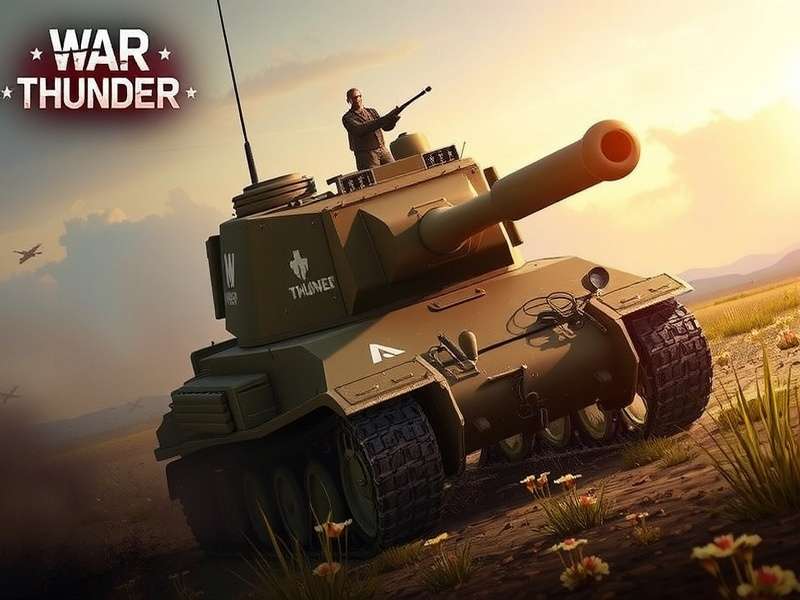
1. Introduction to War Thunder Tank Gameplay 🎯
War Thunder's tank combat has evolved dramatically since its introduction. From the early days of Ground Forces to the complex, multi-layered battles of today, the game now offers three distinct modes: Arcade, Realistic, and Simulator. Each mode places different demands on the player, and understanding these differences is the first step toward mastery.
1.1 The Evolution of Tank Combat in War Thunder
When Gaijin Entertainment first introduced ground vehicles, the community was sceptical — could a flight sim developer truly do justice to tanks? Fast forward to today, and War Thunder boasts one of the most detailed damage models in gaming. Every shell, every piece of armour, every module is calculated in real-time. For UK players, this means that the beloved British tea-break tradition of "hull-down" sniping has never been more rewarding.
Key milestones include the introduction of hull break, overpressure mechanics, and the recent rework of spalling and fragmentation. These changes have made positioning and shot placement more critical than ever.
1.1.1 From Arcade to Simulator: Choosing Your Mode
Arcade Battles are perfect for grinding and learning. You get a lead indicator, faster repairs, and a third-person view that makes spotting enemies easier. Realistic Battles remove the indicator and limit your view, demanding more situational awareness. Simulator Battles lock you into a cockpit-like view from the gunner's seat — the ultimate test for hardcore tankers. For UK players who enjoy a proper challenge, Simulator mode is where the "stiff upper lip" truly shines.
2. Mastering Tank Mechanics & Controls ⚙️
Before you can dominate the battlefield, you need to understand what's happening under the hood. War Thunder's damage model is a thing of beauty — and terror. Every shell type behaves differently, and every armour plate has a weakness.
2.1 Core Combat Mechanics
Let's break down the fundamentals that every UK tank commander needs to internalise.
Armour Penetration
Understanding effective armour thickness, angle of attack, and shell normalisation is key. British APDS and APFSDS rounds excel at long-range precision.
Damage Models
Spalling, overpressure, and ammo detonation. Learn where to hit each vehicle for maximum effect — crew compartment, ammo rack, or fuel tank.
Ammo Rack Management
Carrying less ammo reduces the chance of catastrophic detonation. A tip from top UK players: take only 15–20 shells for most MBTs.
Shell Types
AP, APDS, APFSDS, HEAT, HESH — each has a specific use case. HESH is particularly effective against lightly armoured targets and roof armour.
2.1.1 Armour Penetration & Damage Models — Deep Dive
When you fire a shell at an enemy tank, the game calculates penetration based on shell velocity, mass, angle of impact, and armour quality. British tanks are known for their excellent gun depression and accurate cannons, making them ideal for hull-down positions. The Challenger 2, for instance, can penetrate most targets at range if you aim for the lower front plate or the turret ring.
One unique aspect of War Thunder's damage model is spalling. When a shell penetrates, it sends fragments flying inside the crew compartment. These fragments can injure crew members, damage modules, or set off ammunition. The recent overpressure mechanic also means that HE shells and HESH can cause fatal damage even without direct penetration — something every UK tanker should exploit.
2.1.2 Ammo Rack Management — A Pro Tip
In the War Thunder community, ammo rack management separates the rookies from the veterans. Carrying a full load of ammo increases the chance of a catastrophic explosion. Most competitive UK players carry between 15 and 20 shells — enough to secure 5–6 kills, but not so many that your tank becomes a bomb. Always store ammo in the lower part of the hull to minimise risk.
2.2 Advanced Control Schemes
Your control setup can make or break your performance. Here's how to optimise for the British playstyle.
2.2.1 Keyboard & Mouse Setup for Precision Sniping
British tanks excel at long-range engagements. Set your mouse sensitivity to a lower value for fine aim control. Bind "brake" and "gearbox" controls to easily perform neutral steering — essential for adjusting your hull position without exposing your side armour. Many top UK players also bind "fire extinguisher" and "repair" to easily accessible keys.
2.2.2 Controller Configurations for Console Players
If you're playing on a console, consider using the "advanced" control preset. This gives you independent control over the hull and turret, allowing you to traverse your turret while turning the hull — a must for maintaining situational awareness. Adjust your dead zone settings to avoid unwanted movement when sniping.
3. Top Tank Strategies for Every Battle Rating 🏆
Battle Rating (BR) determines the matchmaking and the vehicles you'll face. Each BR bracket has its own meta, and knowing how to adapt is crucial.
Low Tier (BR 1.0–3.7)
Fast, fragile, and fun. Focus on flanking and using your stabiliser (if available). British cruisers like the Cromwell are excellent for hit-and-run.
Mid Tier (BR 4.0–6.7)
The sweet spot for British tanks. The Churchill and Centurion lines shine here. Use hull-down tactics and control the engagement range.
High Tier (BR 7.0–11.0)
Thermals, tandem warheads, and depleted uranium. Speed and situational awareness are everything. The Challenger 2 and Black Night are top contenders.
3.1 Low Tier Tactics (BR 1.0–3.7)
At low tiers, British tanks are characterised by good gun depression, decent mobility, and paper-thin armour. The Cromwell and Crusader are fantastic for aggressive flanking. Use your speed to get to key positions early, then use your gun depression to shoot from unexpected angles. Avoid brawling — you can't trade shots with a KV-1 or a T-34.
Pro tip: In Arcade mode, use the lead indicator to practice long-range shots. In Realistic, learn to read terrain contours to guess where enemies might appear. The British 2-pounder and 6-pounder guns have excellent penetration for their BR — aim for centre mass and watch the rounds slice through.
3.2 Mid Tier Excellence (BR 4.0–6.7)
This is where British tank design truly flourishes. The Centurion Mk.1 and Churchill VII are iconic vehicles that reward methodical play. At this tier, you should focus on hull-down positions — your turret armour is significantly stronger than your hull. Use the terrain to hide your lower front plate and only expose your turret when firing.
The Comet I is a personal favourite among UK players. It combines the mobility of a cruiser with the firepower of a heavy tank. Use it to exploit gaps in the enemy line, then disappear before they can react. Remember: survival is more important than kills. Every tank you keep alive is a threat the enemy must respect.
3.3 High Tier Warfare (BR 7.0–11.0)
At top tier, the game changes entirely. Thermal imaging, laser rangefinders, and advanced composite armour dominate the battlefield. The British Challenger 2 (2F) and Challenger 2 Black Night are formidable opponents, but they require a specific playstyle.
Your strengths are gun accuracy, turret armour, and survivability. Your weaknesses are mobility and hull armour. Always fight from prepared positions — use the terrain to cover your hull and only expose your turret. The Challenger 2's Turret Ring is a weak spot; wiggle your turret between shots to make it harder to hit.
One unique tactic at top tier is "overpressure sniping" — using HESH rounds to attack lightly armoured vehicles or the roofs of MBTs. A well-placed HESH round can destroy a T-80 or Leopard 2 in one shot if you aim for the turret roof or engine deck.
For the latest vehicles and balance changes, keep an eye on War Thunder Updates. The meta shifts frequently, and staying informed is your best weapon.
4. Exclusive Player Interviews 🎙️
We sat down with two of the UK's top War Thunder tank commanders to get their insights. Here's what they had to say.
4.1 Interview: "Top 500" — The Mind of a Competitive Tanker
Q: What's the biggest mistake you see new tankers make?
A: "Overexposure. They push too far, too fast, and get caught in crossfires. British tanks are not brawlers — you need to pick your fights and always have an escape route. Patience is a virtue, as we say."
Q: Any advice for grinding the British tech tree?
A: "Focus on the Centurion line first. The Centurion Mk.3 is a beast at its BR and teaches you the hull-down playstyle that you'll need at top tier. Also, crew skills matter — invest in 'Leadership' and 'Targeting' for faster turret traverse and better accuracy."
4.2 Interview: Clan War Strategies Revealed
We spoke with the leader of a top UK squadron about coordinated tank play. "Communication is everything. In clan battles, we use a simple callout system: position, target, action. For example, 'B4, T-80, flanking left.' Keep it short and clear. We also practice leapfrog tactics — one tank moves while the other covers, then swap. This minimizes exposure and keeps the enemy guessing."
He also emphasised the importance of map knowledge: "Learn the common sniper positions, the cover routes, and the cap points. On maps like 'European Province' and 'Carpathians', the first team to control the central ridge usually wins. Use smoke grenades to cross open ground — they're underutilised by most players."
5. Vehicle Reviews & Recommendations 🚀
Choosing the right vehicle for your playstyle is crucial. Here's our breakdown of the best British tanks for each category.
5.1 Best Heavy Tanks
- Churchill VII (BR 4.7) — Incredible armour for its tier. Use it to hold choke points and absorb damage while your teammates flank. Weak spot: the machine gun port.
- Conqueror (BR 7.7) — A sniper's dream. The 120mm gun is laser-accurate, and the turret armour is bouncy. Play it hull-down and you'll be a nightmare to dislodge.
5.2 Best Medium Tanks
- Cromwell I (BR 3.7) — Speed demon. Use it to capture points early and flank slow heavies. The gun is adequate but the mobility is outstanding.
- Centurion Mk.3 (BR 6.7) — The gold standard for British mediums. Excellent gun depression, solid turret armour, and a deadly 20-pounder gun. A joy to play.
- Challenger 2 (2F) (BR 10.7) — Top-tier dominance. Use its accurate cannon and thermal optics to control long sightlines. Keep your hull hidden at all costs.
5.3 Best Light Tanks
- Scorpion (BR 6.7) — Tiny, fast, and deadly. The 76mm gun can penetrate most targets it faces. Use it for scouting and ambush tactics.
- FV101 Scorpion (BR 7.3) — An upgraded version with better firepower. Perfect for hit-and-run in urban maps.
5.4 Best Tank Destroyers
- Achilles (BR 4.7) — A powerful 17-pounder gun on a mobile chassis. Play it as a sniper — flank and punish overextended enemies.
- Challenger (BR 5.3) — Not to be confused with the MBT. This open-topped TD has a fantastic gun but is vulnerable to aircraft and artillery. Use it from prepared positions.
Looking to build your dream lineup? Check out the Warthunder Store for premium vehicles and boosters that can accelerate your progress.
6. Maps & Positioning Guide 🗺️
Map knowledge is 50% of the battle. Here's how to approach different terrain types with British tanks.
6.1 Urban Combat Maps
Maps like American Desert, Finland, and Sweden feature tight streets and close-quarters combat. In these environments, situational awareness is everything. Use your stabiliser (if available) to fire on the move. Stay close to buildings to limit enemy sightlines, and always keep a retreat path open.
British tanks with good gun depression can use rubble piles as makeshift hull-down positions. Peek around corners using third-person view to spot enemies before exposing your hull.
6.2 Open Field Maps
European Province, Kursk, and Maginot Line are sniper paradises. British tanks excel here — use your accurate guns and thermal optics to engage at range. Always move from cover to cover, using ridges and depressions to hide your hull. If you're spotted, pop smoke and reposition.
Pro tip: On open maps, stay hull-down on reverse slopes. This allows you to fire while only exposing your turret, making you a much harder target to hit.
6.3 Mixed Terrain Maps
Carpathians, Ash River, and Frozen Pass combine urban and open areas. Flexibility is key. Use light tanks to scout ahead and identify enemy positions. Medium tanks should stay in the middle, ready to support either flank. Heavy tanks should hold key intersections and choke points.
7. Economy & Progression 💰
Grinding the British tech tree can be a marathon. Here's how to optimise your progression.
7.1 Silver Lions & Research Points
Silver Lions are the in-game currency used to purchase vehicles, modules, and repairs. Research Points unlock new vehicles in the tech tree. To maximise both, focus on playing vehicles with a premium account or premium vehicles. Daily boosters and event rewards also help.
7.2 Crew Skills & Ace Crews
Your crew is just as important as your vehicle. Invest in Leadership (increases turret traverse and reload speed), Targeting (improves accuracy), and Driving (improves hull traverse and speed). An "Ace" crew provides a 10% boost to all skills — well worth the investment.
7.3 Module Research Priority
When you unlock a new vehicle, prioritise these modules:
- Parts — enables in-battle repairs.
- FPE (Fire Prevention Equipment) — allows you to extinguish fires.
- Ammo — unlock the best shell types for your gun.
- Engine & Transmission — improves mobility.
- Filters & Suspension — improves off-road performance.
For a full breakdown of costs and requirements, visit our War Thunder Sales Guide for tips on saving Silver Lions.
8. Community & Competitive Scene 🌍
War Thunder's UK community is vibrant and growing. From casual squadrons to professional tournaments, there's a place for every skill level.
8.1 Tournaments & Events
Gaijin regularly hosts official tournaments with cash prizes and exclusive rewards. The War Thunder Esports scene has grown significantly, with teams from the UK competing at the highest level. Keep an eye on the War Thunder Updates page for upcoming events.
8.2 Clans & Squadrons
Joining a clan is the best way to improve. Look for squadrons that use Discord or TeamSpeak for communication. Many UK clans focus on Realistic Battles and offer training sessions for new members. Playing in a squad not only makes the game more enjoyable but also teaches you teamwork and coordination.
9. Frequently Asked Questions ❓
Q: What's the best British tank for beginners?
The Cromwell I (BR 3.7) is forgiving, fast, and teaches you the importance of mobility. It's a great platform for learning map positioning and flanking tactics.
Q: How do I counter Russian heavy tanks?
Aim for the lower front plate or the turret ring. Use APDS or APFSDS rounds for better penetration. If you can't pen, use smoke to disengage and reposition.
Q: Is War Thunder free to play?
Yes! War Thunder is completely free to download and play. You can progress through the tech trees without spending a penny. Check out Is War Thunder Free for more details.
Q: What are the system requirements?
War Thunder scales well on a wide range of hardware. For the best experience, you'll want a modern CPU, 8GB+ RAM, and a dedicated GPU. See our War Thunder Game System Requirements guide for detailed specs.
🔗 Essential War Thunder Resources
- Warthunder Store
- War Thunder Updates
- War Thunder Apk Download Pc
- Thunder Infantry
- War Thunder Sales Guide
- War Thunder Game System Requirements
- Is War Thunder Free
- War Thunder Pc Game Free Download
- Thunder Game
10. Conclusion 🏁
War Thunder's tank gameplay is a deep, rewarding experience that combines historical authenticity with competitive intensity. Whether you're a seasoned commander or a fresh recruit, there's always something new to learn — a new flank to exploit, a new shell type to master, or a new vehicle to fall in love with.
We hope this guide has given you fresh insights and practical strategies to take into your next battle. Remember: every defeat is a lesson, and every victory is a milestone. Keep your turret traversing, your gun loaded, and your spirits high.
See you on the battlefield, commanders. 🇬🇧